

Pixel Guard: keep invalid sessions out of your ad platform signals
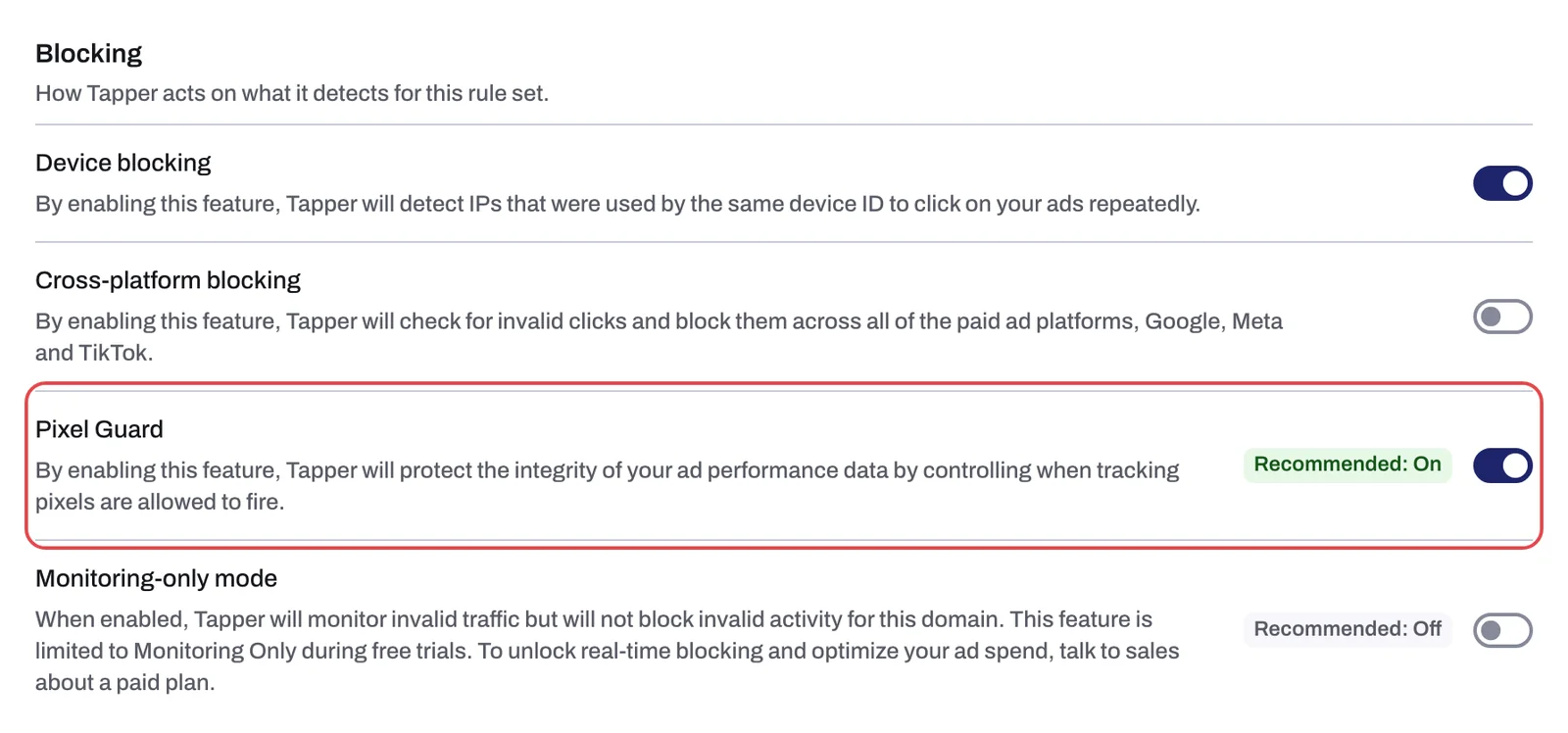
Pixel Guard is the switch Block tracking pixels for invalid traffic, the last row on the Detection features tab of a rule set (Setup > Rule sets). Its help reads "Stops Google Analytics and the Meta Pixel from firing for visitors Tapper blocked." The chip reads Recommended: On, but a new rule set starts with it off, so you turn it on yourself.
Why it matters
Ad platforms optimize on the signals your pixels send: who converted, who stayed, which audience to go after next. When bots, click farms, competitors or other invalid sources fire those pixels, the platform learns from sessions that will never become customers. Over time you can see:
- higher cost per acquisition
- less stable performance from week to week
- audience and conversion signals that no longer describe your real customers
Blocking invalid clicks stops you paying for them. Pixel Guard also keeps those sessions out of the data the platform optimizes on.
How it works
- Tapper decides which sessions are invalid with the rules of the rule set the visitor falls under (thresholds, detection features, country rules).
- With the switch on, tracking pixels are held back on those sessions, so the ad platform gets no signal from them.
- It works through the monitoring script, so the script must be installed and loading. See The monitoring script: what it does and where to find it.
The switch is set per rule set. Turning it on in the default set covers every platform, ad account and campaign not linked to a custom set; check it in each custom set too. See Rule sets: apply different rules to platforms, ad accounts or campaigns.
Turn it on
- If your workspace has more than one protected entity, pick it in the switcher at the top of the sidebar.
- In the sidebar, under Setup, click Rule sets. Pick the set under Ad campaigns and open its Detection features tab.
- Switch on Block tracking pixels for invalid traffic. It saves the moment you click it.
You can also switch it on during onboarding: the step Set your detection rules shows the default rule set's settings.
If your site uses a Content Security Policy
A Content-Security-Policy header that does not allow Tapper's sources stops the monitoring script, and with it Pixel Guard. Setup > Website > Monitoring shows the lines to add, and Allow Tapper in your Content Security Policy explains each one.
Related
Was this helpful?
Still need help?
Chat with our team and mention this article.